
LOUVRE COMPLEX
sugar dating, body-as-diminishing-asset, midlife crises, Gerhard Richter, spinster fictions, Watteau's Pierrot, parking garage sex
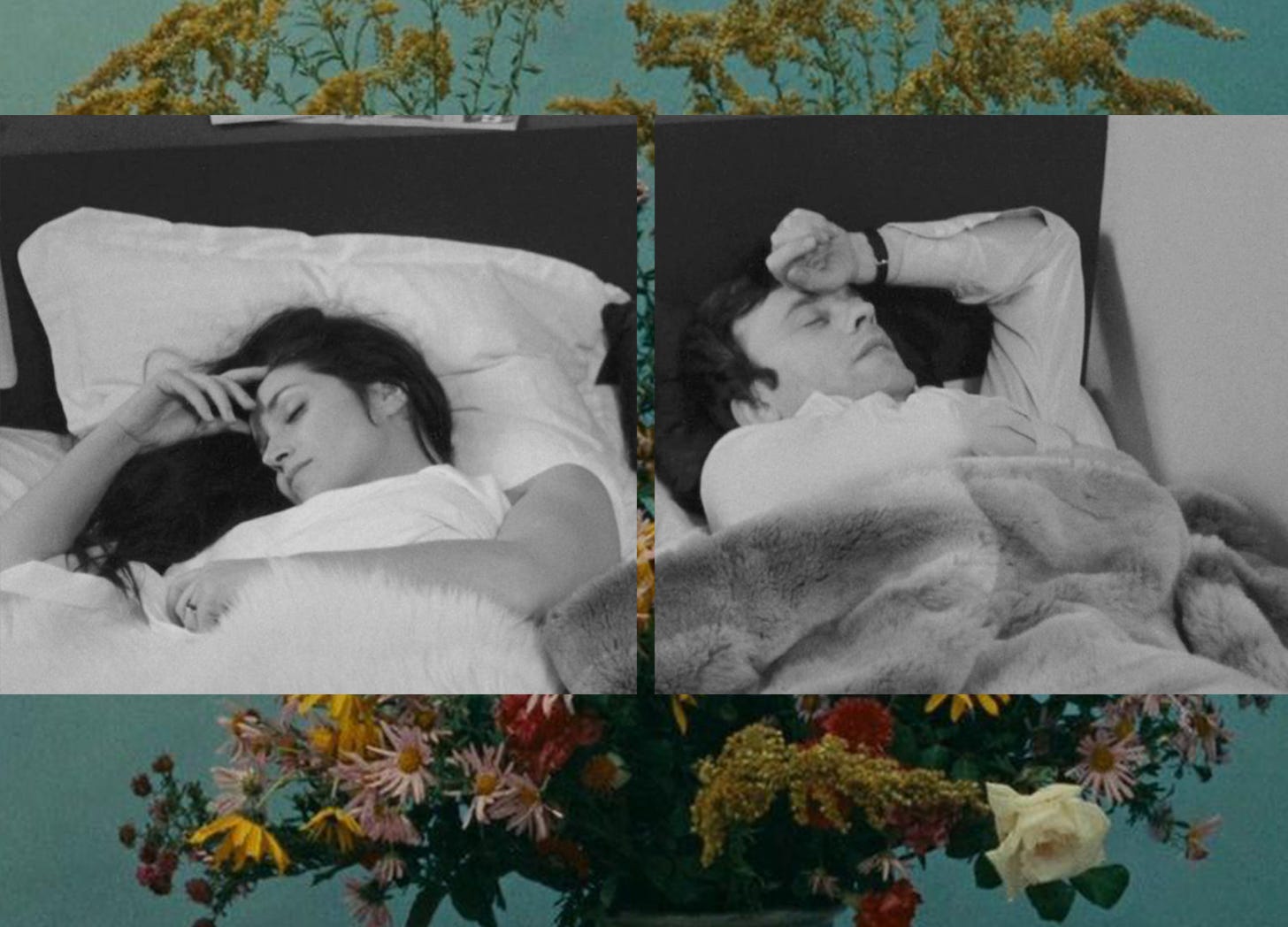
This is an unexpurgated version of a sex diary that will appear at some point (on Sunday?) on the New York Magazine website. Jump to the bottom if you just want to read the “music blog” endnotes.
WEDNESDAY
After work, N texts to ask if I want to split a car to the airport—we live in the same neighborhood. Though I do not relish trekking to the airport in the cold, I decline. I’ll tolerate discomfort to save $50.
I’ve always worried about money, but turning forty prompts reckonings. I will not have enough money to retire, and a medical emergency would ruin me. My savings and my vacations are funded by sugar dating, which I’ve been doing off-and-on for over ten years. It’s logistically easy to get work on the apps: you set up a profile and wait for men to ping you. And it’s efficient: in a few hours spent fucking well-heeled men, I earn what I make in a single paycheck.
But now I’m keenly aware of my body as a diminishing asset. I’m noticeably “old” on these sugar dating apps—I don’t lie about my age and don’t cover my graying hair, my wrinkles. A perverse impulse to “be myself” in a market that discourages it. Men no longer think of me as a person worth paying for sex; they see me as an age-appropriate woman looking for Upscale Dating. I know I’ll have to find another income stream soon, which worries me. Freelance graphic design, obviously, does not pay as well.
I water the plants, check the outlets and the stove paranoiacally. Call of the void: I imagine a gas leak, a spark from the outlets and all of my possessions going up in flames. A liberating thought. I’d have no choice but to start all over again—not just fantasize about it, but be compelled, sink-or-swim, to do things differently.
*****
I meet N at the airport bar. We’re both at thresholds: N, forty, an artist, once an inveterate fuckboy, is now cautious about his health and wants to settle down. We were in a situationship for years until he’d ended it almost two years ago, when I’d wanted to Define It.1 We remained distant friends. I saw other people, accumulated fresher injuries with which to preoccupy myself. Though I wondered if our trip to Paris to see the Gerhard Richter retrospective—which I’d proposed, three martinis deep, back in October—would reignite some latent spark.
*****
As we’re boarding, I bite off half a THC gummy and hand him the other half, which he consumes with a handful of melatonin. Because we booked separately, we’re seated apart.
THURSDAY
Arrival in Paris. I wait for N, who was seated further back, at the gate. He emerges looking great: tall, salt-and-pepper hair, sunglasses on—affecting a Bourdainian loucheness. I know I’m puffy and disheveled, and don’t care. I’m more stressed about getting to the city center, so I steer us to a cafe in the terminal to turn my brain on. As the caffeine kicks in, I sort out the train logistics—downloading the transit app, loading up payment cards, activating tickets etc. N seems wholly unconcerned about this. A difference in style I hadn’t noticed before: I’m a preparer and he takes things in stride.
*****
We arrive at the hotel before check-in so we leave our bags at the front desk and walk to Père Lachaise cemetery. At Proust’s grave, I feel compelled to leave something behind. I search my bag and come up with a list of wishes I’d composed on New Year’s Eve—a ritual with my friend E. (At the top of the list? The sort of banality even Proust would execrate: “stability.”) I fold the list into a crane and stick it in a pile of flowers.
I snap a picture of N by Proust’s grave, which he sends to his family group chat. I wonder how N has characterized me in this chat. An “ex”? A “friend”?
We rest on a bench after walking up and down the cemetery hills. “Thanks for suggesting this,” N says, patting me on the shoulder awkwardly, in a studiously unromantic way, “this was a great idea.”
“Of course,” I say, “I’m glad we pulled the trigger.” And I mean it. The walk, exchanging reflections on the artists buried here, makes me happy to be alive, to have someone to share it with.
*****
Our room is ready, furnished with two twin beds—N’s request—and a kitchenette. He set an implicit no-sex boundary early, when we were booking rooms months ago: “no offense, but I’d prefer to have separate beds.” At the time, I’d felt mild irritation: not because sex was off the table, but because I felt overly managed—like I was a threat to his autonomy.
“We should get some flowers…spruce up the place,” he says, looking around, “it has no ambiance.”
“What for? We’re not going to be spending much time here,” I say.
N starts moving in, transferring clothing from his suitcase into the drawers and onto the hangers in the closet.
“Do you always do that?” I ask. I never move in; I always live out of my suitcase.
“Yeah, it’s nice. Also my shirts will wrinkle if I don’t hang them up.”
Once, I might have mined this domestic impulse for meaning, interpreting it as a sign that he’s situating me in his life. Now, his creature comforts are merely endearing.
We walk around Bastille looking for a bar, but it’s built up like Greenwich village: busy, loud, performing itself. Finally, we pick the first spot with an empty table outside. The drink menu is suspiciously varied—too many tiki drinks. I just want a martini. The waiter insists they do not make martinis, so I order a gin and tonic. N has a beer. When my drink—too much ice, mostly tonic—arrives, I decree: only wine from now on.
*****
We shower, and climb into our separate beds like a couple in a post-code film. N complains about the thin covers and turns up the heater.
“You run hot anyway,” I say.
“What kind of hotel is this?” he jokes.
Surprisingly little tension, perhaps because I’m exhausted from traveling and just want to sleep. I turn out my light. We exchange good nights.
FRIDAY
My alarm wakes me up at 7 a.m. N stirs, but starts snoring again. I get dressed and grab a coffee downstairs, read the book I’d brought with me: Julio Cortázar’s Hopscotch.
A few hours later, N hops in the shower and emerges eons later smelling of skin, Chanel Antaeus. He comes out in a towel, but gets dressed in the bathroom—as did I, earlier that morning. It reminds me of having a male roommate—living in close quarters with guy I’m not fucking. I remembered long mornings in his apartment, how they never felt “long” because I didn’t want them to end. Now I’m restless, wondering when we’ll make it out the door.
N takes out several outfits. He tries on one shirt, then another. Tosses a sport coat over one, a long coat over the other.
Christ.
N is an artist, but the outfit he settles on makes him look like an off-duty banker in the 90s.
Finally, he puts his sneakers on: “OK, I’m ready to head out.”
*****
N drops his Zyn in a puddle at the train station.
“Just leave it,” I say, “clearly, you are not meant to have it.”
But N steels himself: he picks it up, empties the pouches into his pocket, and tosses the container.
“I need to wash my hands,” he says.
N strides into an empty cafe and asks, in unalloyed Midwestern American English, for the bathroom. I wait outside, feigning interest in the menu, worried I’ll have to buy a drink.
*****
At the Gerhard Richter retrospective, N and I move through the galleries slowly. We do not feel the need to look together: we drift apart, occasionally meeting at certain paintings. It feels luxurious, spending a long time looking at a painting. It cuts through the noise in my head: worries about my precarity, how much money I’m hemorrhaging on this trip. Even sex—ostensibly free, sometimes profitable—can be a burden: I’d had to dip into my vacation fund considerably last summer paying for syphilis treatment.
The galleries are arranged chronologically, beginning with Richter’s paintings from vernacular photography through his late abstractions. Throughout, the paintings show the artist’s attention to surface—making the hand alternately “quiet,” like the smooth appearance of a blurred photograph; and mannered, with visible strokes. But there’s something arresting that arises between Richter’s ostensible subject (an ex-wife, a flower, an atrocity, an annunciation scene, a pastoral scene à la the German Romantic tradition, color itself) and the physical painting (its scale, its surface, its sheen or lack thereof): the muted affect that comes through beneath all that technical control. When he allows a vivid blue to emerge from his grays, it’s nearly joyful.
Good Museum Friends—people who match your pace, enjoy looking at length, share reflections—are rare. In Thomas Bernhard’s Old Masters—a book N recommended to me—a widower recalls sitting with his wife every day in front of the same Tintoretto. Very romantic, this sustained attention, shared aesthetic experience. In my solo travels, I feel most alone when I am enjoying the act of looking and have no one to share it with.
I feel grateful for N’s presence, his love for painting and his fluency on the subject.
*****
“What do you feel like eating for dinner? Do you even have an appetite?” I ask N.
“Yeah, I could eat something. Let’s go out. I trust you to pick the place,” said N.
I scan google maps irritably and see what’s close by. I lock in on a wine bar a few blocks away.
*****
At the wine bar, I ask N what he’s going to have as I scan the menu.
“I might get a beer,” said N.
“Do they even have beer here? This is a wine bar. If I’d known you’d wanted a beer, I would have picked a different place!”
Clearly, I am hangry. I order everything I want to eat, ostensibly for both of us: olives, steak tartare, oysters, trout rillettes. Fuck it.
But my glass of white is both cheap and extraordinary. The food is delicious. N orders a beer, but after tasting my wine, he switches over himself.
“You picked a great spot,” N says.
“Right?” I say, smug, cheerful from the wine.
*****
Back at the hotel, I thought I’d feel hornier, less inhibited, having had so much wine, but perhaps this is the age factor: I just want to crash.
SATURDAY
N wakes up, makes himself a heaping bowl of yogurt and granola. I’ve been up a few hours downing glasses of water, trying to ward off a hangover.
Studying the box, he observes that the “health grade” on this ostensibly healthy product is a “C.”
“Funny,” I replied, “I wouldn’t advertise that.”
N picks up my copy of the London Review of Books, wordlessly brings it with him into the bathroom. I am charmed and irritated by his audacity.
*****
Day two at the Richter retrospective. I love that N suggested two days—a true Museum head.
I stare fixedly at a small painting of apple trees from a private collection. I feel compelled to exhaust this painting and others from private collections—the way Georges Perec tries to exhaust a place—by trying to register every detail. It’s the same with certain men: I try to catalogue everything about them, the appealing minutiae, especially when I sense we’re unlikely to meet again.
*****
We stop at a café in Neuilly-sur-Seine for a drink. A toddler wanders over from a neighboring table, dancing with a toy in his hand and looking at us. We smile at him.
The toddler’s parents seem relieved that we’ve indulged him; they call him over, apologizing.
It occurs to me then that we’d benefited from looking like a Nice Couple—not a lonely woman of a certain age, a sketchy middle-aged man drinking alone—a presumed respectability in that.
In the fall, I was preoccupied with Spinster fiction—an attempt to come to grips with possible futures. “Safety does not come first, girls,”: so says Muriel Spark’s eponymous spinster Jean Brodie, a middle-aged woman full of romantic delusions, sabotaged by her taste for artistic virtuosity, intense feelings, unsuitable men. She is, unfortunately, the Spinster Archetype most like me. I’m certainly no Mildred, from Barbara Pym’s Excellent Women, a modest woman whose expectations of life are managed with unassailable reasonableness—she expects little of life and of men, worships god.
But I am neither in my “prime” like Jean Brodie and I am not “excellent” like Mildred . Above all, I feel illegible to myself and others: the spinster is defined by lack, an absence of something to be understood in relation to (work, family, god, etc.). This is what makes them strange, unsafe—people tend not to trust Unknown Quantities.
An echo of my friend, M, whose many charitable causes include trying to set me up with her husband’s tech friends: “Dating in your forties is not a good look. People take you more seriously when you have a husband, I hate to say it.”
*****
“Do you want to go dancing tonight?” I ask after dinner.
“Yeah,” N says, “where are you thinking?”
I can’t decide: either a disco party, a train ride away; or a house music thing within walking distance.
“You pick.”
At the hotel, N turns on the TV and immediately falls asleep. I deliberate some more and doze off.
*****
Post disco-nap clarity: “I’m going to the disco party—I’m getting dressed. Are you joining me?”
We leave in record time. N throws on a tank top under a shirt and doesn’t think twice about it.
Inside the club, it’s busy—the dance floor is packed. I take off my sweater and stuff it in my bag. I sense that I am being sized up, having put a modicum of effort into my appearance: my top is tight, cropped, low cut, and pushes my breasts up. I’ve let my hair down. In this darkened room, few will notice my grays, my wrinkles; I cut a silhouette feminine enough to draw gazes.
On the dance floor, like the museum, N and I drift apart and back together again.
At one point, I realize I hadn’t seen him in a while and look around. He’s talking to a woman in the back. I spin around, struck by a pang of jealousy. I think about returning to the hotel alone, an empty twin bed beside mine—the minute humiliation of that.
N returns. He’s dancing on his own—quite contentedly, which endears me. A man in a mockneck sweater—always a mockneck guy—stands very close, clearly wanting to grind on me. I move away, but mockneck moves closer, puts his hand on my waist. Finally N passes in front of us, says he needs water. Bystander intervention or coincidence?
“I’ll go with you,” I say, and bolt.
Once out of the crowd, the prospect of pushing our way back in seems exhausting. We agree that it’s time to go.
Back at the hotel, N changes quickly and flops into bed. I take a warm shower and turn in. I hadn’t been out this late in a while, and pass out quickly.
SUNDAY
At the Orsay, we head straight for Manet. In the same gallery as Olympia is a seaside painting, Sur la Plage, which arrests me with its striking banality: a couple, covered in muslin, lounge on a beach. The woman reads and the man looks out, both absorbed—alone, together. There’s a preponderance of grays and blues—like Richter—but here it’s melancholic. Manet’s loose brushwork underscores the fleeting nature of this repose, a rare beautiful day—like he was rushing to capture the essence of this in-between moment before it passed.
But it’s the Renoir paintings that surprise me this time: something tender in the mannered brushwork; the naïveté of bows, flushed cheeks, ruffled sleeves; the blue-gray cast of his outdoor leisure scenes.
*****
At the wine bar—quiet on a Sunday evening—we’re seated next to a couple on a date, having a lively conversation. N and I, however, sit in deafening silence. I’ve put my phone away, not out of propriety but because I don’t want to look at a screen. N, however, is shopping online. It’s too dark for me to read, so I zone out, annoyed. Finally, N looks up.
“What are you looking for?” I ask.
“I don’t know,” he says.
We talk about our families, how they might have fucked us up. I sense regret in N, for the long path he took toward figuring himself out—I could relate. Two glasses deep, I feel inclined to motivational speech:
“I think you think you’re not smart. So you overcorrect, you do a lot of research, you overshoot the mark. You’re smart enough. Don’t hesitate or overthink it—you’re oscillating between these poles. You have to trust yourself more.”
“You’re probably right about that,” he says, “thanks.”
For me, reads like these are gestures of friendship—a way of holding up a kind, but unvarnished gaze on someone you care about, to help them out of their heads. I’m not sure N feels the same way, but he seems to welcome it; he has never hesitated to speak his mind.
MONDAY
I wake in the middle of the night. I look over at N and see him—am I hallucinating?—on top of the covers, completely naked. I wonder if he’d overheated and shed his clothing, half-awake. It had been a long time since I’d seen his body. There’s a vague ache for him, like a phantom limb. No one fucks me rough—not like he did—and I still, regrettably, have a tendency to measure other men up to his standard. But I’m activated by reciprocity: if a man doesn’t want me, I don’t want him. Even when we were together, I never initiated sex. And so I feel like I’m observing a kouros in a museum: he does not belong to me, but I can admire him, all the elements that make him desirable.
I turn away, worried about being caught looking. N is snoring, so I put my noise-cancelling earplugs in and fall back asleep.
*****
When N gets out of bed, he’s in his shorts.
“I think I’m going to do laundry today,” N says.
“Why? You can do laundry in New York!”
“I like doing laundry. I’ll do yours, too—give me your stuff.”
“No—then I won’t have anything to wear.”
I did not want to spend my last day waiting for clothing to dry in a hotel room.
“While you’re doing laundry, I’m going to go to Montparnasse Cemetery.”
*****
My first stop at Montparnasse is Samuel Beckett’s grave. He’s buried with Suzanne Dechevaux-Dumesnil—“a real ride or die bitch,” as my friend B characterized her—she tolerated his affairs, inspired him, encouraged his ideas. A formidable woman—I’m not sure I could have done the same.
I leave cranes—folded from torn-out ads in Hopscotch—for all of my favorites: Beckett, Rohmer, Cortázar, Cioran, Varda. At Sontag’s grave, I’m chased away by a leaf blower.
*****
On my way back to the hotel, I try to buy tickets for the Louvre, but there’s a notice on the homepage: “due to unforeseen circumstances, the museum is closed today.”
Turns out the museum workers are on strike. I’m crushed. The main thing I’d wanted to see in Paris, after Richter, were the Louvre’s Watteau paintings. Most of all, I wanted to see Pierrot. The sad clown—clothed in white—between the acts, bearing an inscrutable expression. Pierrot refuses to make himself legible; he’s no longer performing and this is what makes him vulnerable, human. In Hopscotch, the narrator searches for keys to understanding and catches glimpses of it in art, literature, in sex, and in city life—but it’s always incomplete, deferred. In Cortázarian fashion, I’d hoped that seeing Pierrot would unlock something for me, a key to my mid-life crisis.
I think of the cost of a return to Paris—all the men I’d have to fuck, how long it would take to meet my savings goals and pay for another trip, all the other places I want to visit—and feel anguished. After spending the last fifteen years clawing my way out of nearly 100K in student loan and credit card debt—through a string of low-paying jobs and barely legal side hustles—I just want to rest.
*****
N is unbothered by the Louvre closure. He returns to the Richter retrospective after lunch. I’d urged him to go without me; I’d seen enough Richter and wanted to do something that could fill that specific void vacated by the Louvre.
I walk to the Orangerie to see if they’ll accept walk-in visitors, but when I arrive, there’s a sign: only timed ticket holders would be accepted due to crowds.
Je bloque.
My phone buzzes: it’s C, a married Frenchman I’d met in NYC years ago, with whom I have threesomes when he’s in town for work. Incredible luck. I tell him I’m in Paris, but didn’t text because it’s a short trip and we’d have no place to fuck: I’m sharing a room with my ex.
“I have a car. But I’m only free until 6.”
“Interesting development! We could fuck in your car :)”
“OK, I know a good place. A parking garage, if that’s OK with you. You up for a quickie?”
I book it to the train.
*****
At Pont Cardinet, I turn the corner and there he is.
One of life’s greatest pleasures: finding a man waiting for you. It’s endearing, and makes me feel powerful—I’m controlling this man, for now.
He has come from work and is still wearing his suit, his wedding ring. Quite handsome—a face for TV.
He kisses my cheek in greeting and then catches himself: “we must be careful—we are on my home turf now.”
“Of course,” I say, and I keep a chaste distance between us as we walk to the car, though we encounter no one on the way. His car is compact, empty, and very clean—it seems he does not have children.
C pushes the seats all the way forward. We fucked in the back seat, partially clothed in case anyone walked by, with great urgency: C had to be home and I desperately wanted to stop ruminating about being cosmically thwarted from seeing the Watteau paintings, paranoiacally worrying about pouring my savings into trips to Paris, only to get shut out from the Louvre, every time. We put the design limitations—spatialized constraints—of a small car to good use.
It’s a sweat lodge by the time we’re done, the windows beaded with condensation. We get dressed and sweep the car for long hair, condom wrappers, suspicious stains.
“See you in New York,” I say, as he kisses my cheek in farewell. I don’t feel attached to him—he belongs to someone else.
On the train back, I feel narcotized.
*****
N asks about my day. I report it was a near wash until I met my Frenchman for sex in a parking garage.
N is unfazed. “Wow. So you made up for the Louvre.”
I ask N to elaborate on his third viewing of Richter at dinner.
“Oh, I went to McDonalds before I got here. The fries really are better in France.”
“You’re always eating a meal before dinner!”
“Don’t worry about it. One big mac? It’s like you fucking that guy in the parking lot today—it means nothing,” he said, smirking.
“OK, fair,” I said, laughing, relieved that he’d had a sense of humor about it, that there was no jealousy—I didn’t have to manage his feelings.
But it did mean something: I’d managed to substitute one insufficient mode of transcendence for another. And I realized that I truly no longer wanted N to meet all my needs.
*****
At the wine bar, we order a bottle and toast our trip. I wonder if the absence of desire means I’ve fallen out of love with him—or contrarily, that I’ve deepened it, replacing desire with acceptance, familiarity. We’d spent a lot of time together, getting irritated with each other, and having no sex—what I imagine being married is like.
I tell N we need to leave for the airport at 7:30 a.m.
“Roger that,” he says.
TUESDAY
“What time is it?” N asks, towel still wrapped around his waist.
“It’s 7:30—we’re supposed to leave now. Hurry up.”
“I’ll need at least twenty more minutes” he says as he blow dries his hair.
I notice that N hadn’t finished packing.
“I’m going downstairs” I say, grabbing my bag—I can’t bear to watch him drag his feet.
Downstairs, I return my key. I wait. I check the time—it’s almost 8.
Finally, I leave. I text N to let him know and send him the train itinerary.
*****
On the train, N calls repeatedly. He tells me he’s “having a panic attack.” I think he’s being dramatic—I’ve never known him to experience panic attacks. Finally, he texts to say he’s taking a car.
*****
I see N just ahead of me in the security line. We wind past each other, “you made it,” I say. He nods, upset.
My bag gets singled out for inspection. The security guard—a young man—takes out Hopscotch and my laptop. He places the laptop in a machine for further inspection. While the machine does its obscure work, the man reads the jacket copy of my book, looking back at me and nodding with interest. He replaces my belongings and, smiles, handing me my bag:
“Good book.”
Was that man flirting with me? I was sad to leave.
At the gate, N tells me that I should have given him an ultimatum: “if you’re not ready at this time, I’m leaving.”
“I shouldn’t have to give you an ultimatum! I’m not your mother.”
After a pause, N says: “I’ll own up to that. I’m sorry.”
N adds: “The reason I wanted to go on this trip was so you wouldn’t feel abandoned, and then for you to abandon me at the hotel…”
The third rail.
“N, I’m not afraid of being abandoned by you! Also, you don’t have to do anything you don’t want to do—it’s strange to suggest you’re worried about hurting my feelings now.”
Another pause. I feel adrenaline moving through my body—I’m getting angry, and press my mouth shut to avoid saying anything reactive. I wonder if I can trust this man: is he really a friend, someone with whom I can be vulnerable, or will he seek out the tenderest spots and stick me there when he’s threatened.
“I just want to be friends,” N says, “I think we’re good companions…”
“I don’t disagree,” I say, “but let me say this: I would never make a friend of mine late on my account. It’s disrespectful.”
*****
Boarding. N treads lightly. We stand in line together, discuss Hopscotch. N: ”you have to read it out of order? Like Choose Your Own Adventure? That’s silly.”
“I’m not selling it well,” I say.
*****
On the plane, I have my book open, but I’m not reading. I thought I wanted a “partner” but now ambivalence prevails. I am afraid of being alone “when I’m old” and of not having someone to support me—materially, emotionally—when I am struggling. But I like having few obligations, moving at a pace that suits me, building entire vacations around museum visits, not having to parent another adult.
I see now that the things I took personally—his pace, his hesitation, his needs etc.—are just him, his personality. It was an error to assume it had anything to do with his feelings about me. Though I had been irritated by him, a certain intimacy had grown between us, having weathered disagreements, disappointment—and, over time, outgrown different versions of ourselves. Cortázar: “Hateful tenderness, something so contradictory it must have been the truth itself.”
N periodically walks down the aisle to chat with me, stretch his legs.
*****
NYC. N and I ride the train together back uptown. I tell him that I’m sad about the Louvre—shut out after all that effort, all that displaced longing focused onto a single painting.
“You’re turning forty this year, right?” N asks.
“Yeah, in May.”
“We should go back,” he says.
I want to go back very badly—the Louvre, like an avoidant man, remains just out of reach and therefore very desirable. The idea of going with N again appeals—I’ll save money splitting a hotel and, now that we are aware of our differences in pace and logistics, we can plan around them.
At my stop, I give him a hug and suggest a debrief drink soon.
Back home, squaring myself up to return to work the next day, I feel somewhat untethered from reality, dissociated. An overall sense of losing everything—farther, faster, Bishop-ian—and caring less (the “art” of losing) about the waste, finding it increasingly pointless to hold fast to anything that anchored me: the integrity of my body, relationships, my free time, money. Nothing I clung to was as load-bearing as I’d thought.
*****
A sugar daddy asks if I want to meet up tomorrow evening. I enthusiastically schedule him: my Louvre Complex vacation fund starts now.
************STRAY OBSERVATIONS, ETC.
OBSESSED with this Sound Metaphors reissue of Kyoko Koizumi’s Koizumi in the House. It’s 80s j-pop—expensive-sounding, artificial to the max, peak Bubble—with a touch of acid house.
Listen, I’m about Smerz. They’re like Scandinavian Cibo Matto—a studied naïveté, high Cute. Deadpan lyrics over minimalist arrangements. I’ve been listening to Big City Life all winter.
I’ve been listening through this end-of-year list published by Resident Advisor, with special attention to Jesse Dorris’s picks (host of Polyglot, my favorite show on WFMU), including:
- BIG ANG FEAT. SIOBHAN: a nostalgic bassline banger!!
- I somehow went my whole millennial life not knowing there was a Frankie Knuckles remix to Blind. It’s transcendent when the string sample enters some 50 seconds into the song.
I’d written a previous sex diary about the breakup aftermath, which he’d found out about via an instagram ad for The Cut. He was upset about it; not because I’d written about him, but because I’d admitted things in the diary I hadn’t disclosed to him.
Banger 🥂